
Who is Al Lien?
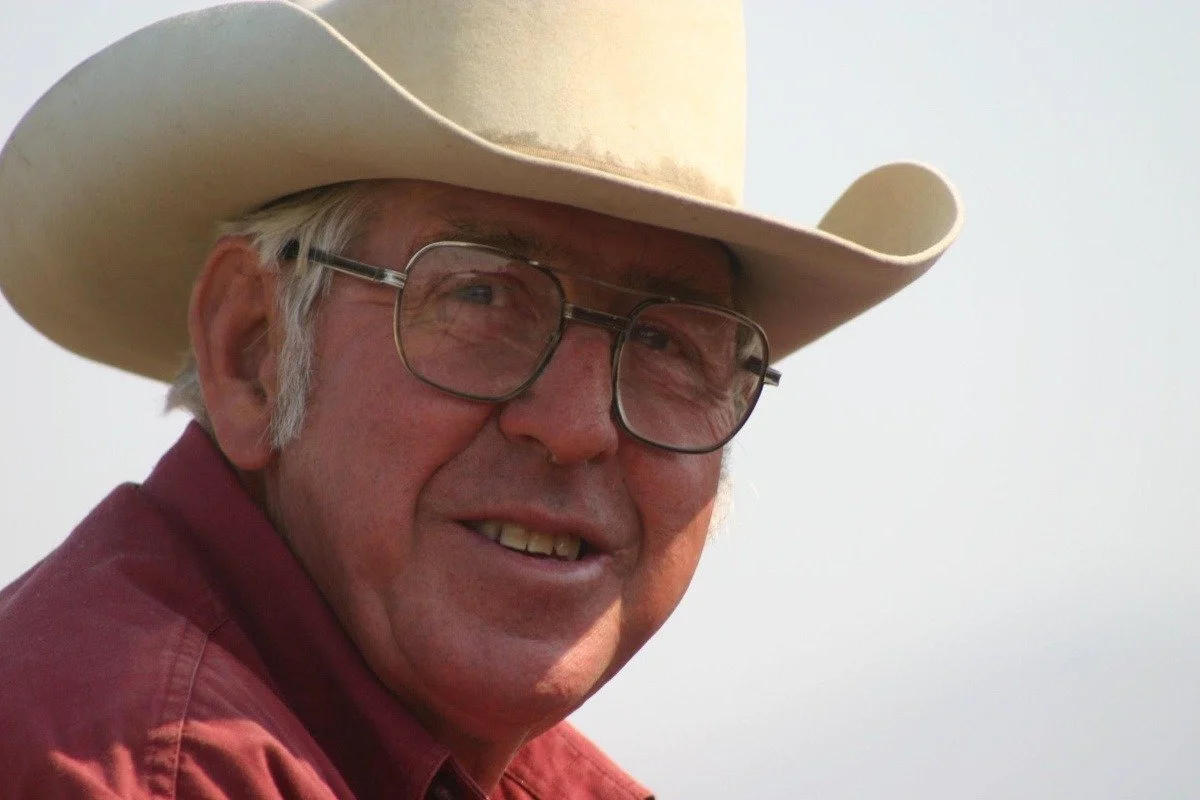
Former Bozeman Mayor, Carson Taylor, called Long time AGAI Board member Al Lien a “frank and thoughtful council.” In 2017, Carson gave Al the key to the City of Bozeman for “his knowledge sharing, patience, and devotion to the larger community- urban and rural.” Montana Time Arts benefited fro his deep, booming voice explaining water movement in “FLOW” and the voiceover explaining water rights in the “Gabriel Ditch” presentations. Al was instrumental in the invention of the “snowbug”, a precursor of the snowmobile at the MSU Experiment Station. The snowbug was developed to reach the snotel sites in the Gallatin and Bridger ranges that record winter snowpack. Before, it had all been done on snowshoes or skis.
Al Lien died on February 20, 2020. Al was generous with his knowledge and his time in sharing our agricultural heritage, representing ag producers in the Gallatin Valley and mentoring anyone, of any age, interested in agriculture. Besides being an AGAI Board member, Al was president of the West Gallatin Canal, a member of the Gallatin County Fair Board, and participated in numerous public forums such as Bozeman’s Integrated Water Resource Plan.
Anyone who encountered Al left with an indelible memory of the encounter. In any conversation with Al, you had his full, unwavering attention and he demanded your full engagement as well. He was impatient with those who said, “I can’t.” Why? Because they hadn’t even tried yet.
The Association of Gallatin Agricultural Irrigators established an account at Stockman Bank in Manhattan to collect donations for a Memorial Scholarship fund in Al’s name.
Mountain Time Arts - Water Works 2017
Gabriel Canal
In 2017 Mountain Time Arts with collaboration from the Kelly Ranch and AGAI created a public artwork. Al Liens voice is featured in the this video. His role in the community and champion of collaboration is on display in Scene Three - 6:09 min into the video.
“With the goal of understanding the ways that culture has contributed to drought, our examination focused on the site’s geographic features including human-dug canals and ditches, and natural springs and wetlands prior to settler contact. We studied the impact of farming and grazing on the soil, the implications of irrigation systems and drought indices. Along with the water features, the guides contributed information about a pre-contact buffalo jump, an indigenous trail and the legacies of European colonialism and settler communities on this region.”
“The Gabriel Canal was a temporal, public artwork, located on the Kelly Ranch just south of Bozeman, MT. The work was built in five performance scenes that produced a geographic and cultural interrogation of the site.”